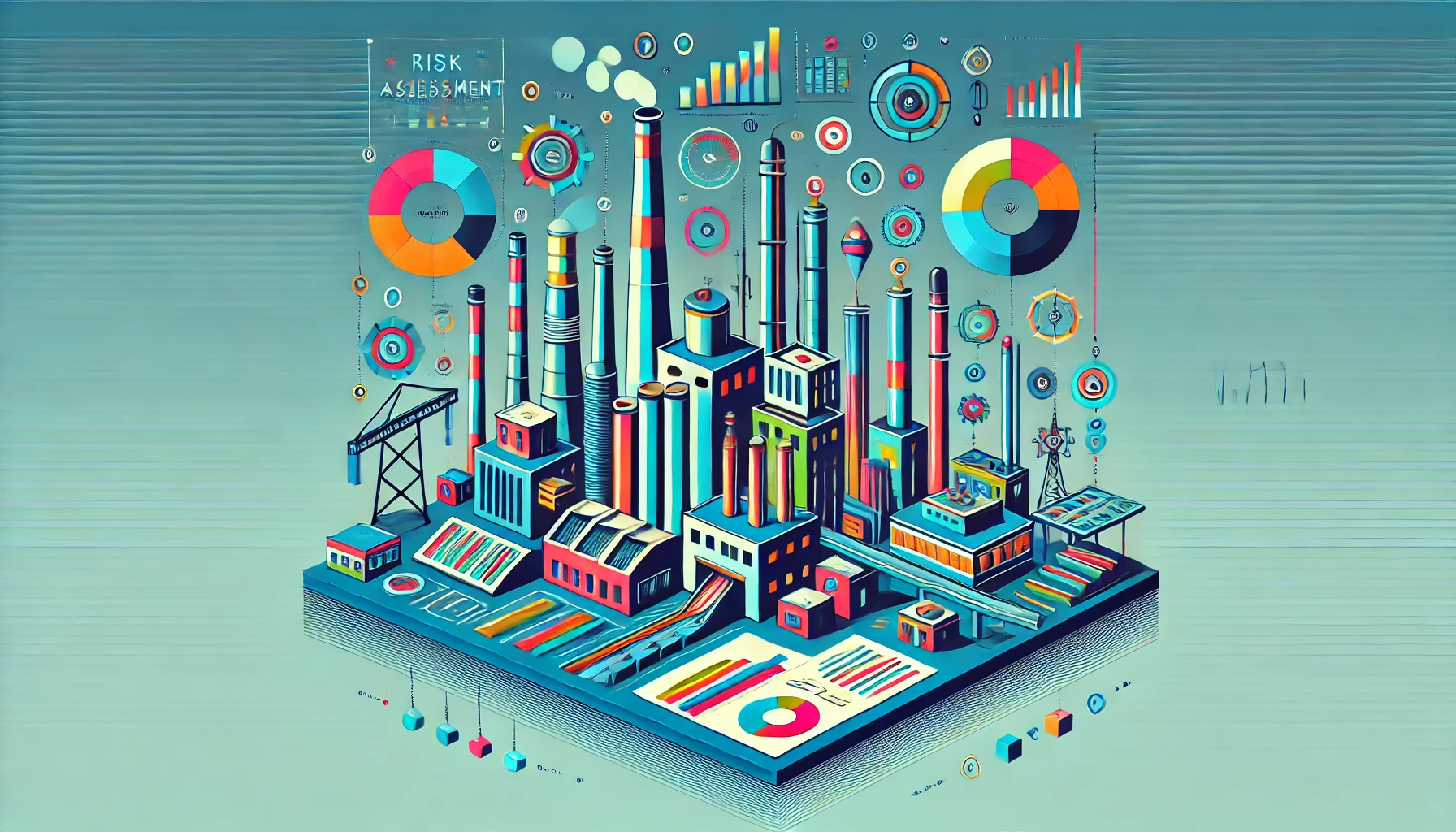
Risk assessment tools for manufacturing plants are methods, systems, and technologies used to identify, analyze, and control risks that can impact safety, production, quality, and business continuity. In the first paragraph, it is important to clearly explain that manufacturing environments are inherently risky due to heavy machinery, complex processes, human factors, and operational dependencies. Risk assessment tools help manufacturers move from reactive problem-solving to proactive risk management, allowing them to prevent accidents, reduce downtime, and protect both people and assets.
What Is Risk Assessment in Manufacturing?
Risk assessment in manufacturing is a structured process used to identify hazards, evaluate the likelihood and severity of potential incidents, and determine appropriate control measures. These risks may relate to worker safety, equipment failure, product defects, environmental impact, cybersecurity, or operational disruptions.
Unlike informal hazard checks, formal risk assessment relies on repeatable tools and documented processes. This ensures consistency, accountability, and compliance with safety, quality, and regulatory requirements.
Risk assessment is not a one-time activity. Manufacturing risks evolve as equipment ages, processes change, new products are introduced, or regulations are updated. Effective plants reassess risks continuously.
Why Risk Assessment Tools Matter in Manufacturing Plants
Manufacturing plants operate under tight margins and strict safety expectations. Risk assessment tools play a critical role in maintaining balance between productivity and protection.
Accident Prevention: Identifying hazards early reduces injuries and fatalities.
Downtime Reduction: Anticipating equipment or process failures prevents costly shutdowns.
Regulatory Compliance: Many safety and quality standards require documented risk assessments.
Cost Control: Preventing incidents is far less expensive than responding to them.
Operational Stability: Understanding risk supports better planning and decision-making.
Common Types of Risks in Manufacturing Plants
Before selecting tools, it’s important to understand the types of risks manufacturers face.
Safety risks from machinery, electrical systems, chemicals, and manual handling.
Operational risks such as equipment breakdowns, bottlenecks, and supply interruptions.
Quality risks including defects, contamination, and process variation.
Environmental risks related to emissions, waste, and hazardous materials.
Cyber and data risks from connected systems and automation.
Human risks involving training gaps, fatigue, and procedural errors.
Key Risk Assessment Tools Used in Manufacturing
Hazard Identification and Risk Assessment (HIRA)
HIRA is a foundational tool used to identify hazards in processes, equipment, and work activities. It evaluates the likelihood and severity of potential incidents and assigns risk levels.
HIRA is commonly used during new process design, equipment installation, and operational changes.
Job Safety Analysis (JSA)
Job Safety Analysis breaks down specific tasks into steps, identifies hazards at each step, and defines safe working methods.
JSA is especially useful for manual operations, maintenance tasks, and non-routine activities.
Failure Mode and Effects Analysis (FMEA)
FMEA systematically identifies how processes or components can fail, the effects of those failures, and their causes.
Each failure mode is ranked based on severity, occurrence, and detectability to prioritize corrective actions.
FMEA is widely used in manufacturing, automotive, aerospace, and quality-driven industries.
Hazard and Operability Study (HAZOP)
HAZOP is a structured, team-based technique that examines process deviations and their potential consequences.
It is commonly applied in process industries such as chemicals, pharmaceuticals, and food manufacturing.
Bowtie Analysis
Bowtie analysis visually maps causes of a risk event on one side and consequences on the other, with controls in between.
This tool helps teams clearly understand how preventive and mitigation controls reduce risk.
Risk Matrices
Risk matrices plot likelihood versus severity to classify risk levels (low, medium, high).
They are simple, visual tools often used for quick assessments and communication.
Checklists and Safety Audits
Standardized checklists help ensure compliance with safety, maintenance, and operational requirements.
Audits identify gaps and verify that controls are implemented and effective.
Digital Risk Assessment Tools and Software
Modern manufacturing plants increasingly use digital tools to manage risk.
Risk management software centralizes hazard registers, assessments, and corrective actions.
Manufacturing Execution Systems (MES) integrate risk data with production and quality information.
IoT sensors provide real-time monitoring of equipment conditions and environmental parameters.
AI-driven analytics identify patterns that indicate emerging risks.
Mobile inspection apps enable faster reporting and documentation.
Digital tools improve accuracy, traceability, and audit readiness.
Benefits of Using Structured Risk Assessment Tools
Consistency: Standard tools ensure risks are evaluated uniformly across departments.
Prioritization: High-risk issues are addressed before minor ones.
Documentation: Written records support compliance and audits.
Prevention: Early detection reduces incidents and losses.
Continuous Improvement: Risk data supports long-term optimization.
Cost Considerations
The cost of risk assessment tools varies depending on complexity and scale.
Manual tools such as checklists and basic matrices have minimal cost.
Advanced methods like FMEA workshops or HAZOP studies require expert facilitation.
Digital platforms involve software licenses, integration, and training costs.
However, the return on investment is often significant through reduced accidents, downtime, insurance premiums, and regulatory penalties.
Pros and Cons of Risk Assessment Tools
Pros
Improved safety and risk visibility.
Reduced likelihood of major incidents.
Supports regulatory and insurance requirements.
Better decision-making and planning.
Protects employees and business assets.
Cons
Time and effort required to conduct assessments.
Requires trained personnel or facilitators.
Can become paperwork-heavy if poorly managed.
Effectiveness depends on data quality and follow-through.
Manual vs Digital Risk Assessment Tools
| Aspect | Manual Tools | Digital Tools |
|---|---|---|
| Setup Cost | Low | Moderate to high |
| Scalability | Limited | High |
| Data Accuracy | Variable | High |
| Audit Readiness | Manual preparation | Automated reporting |
| Real-Time Monitoring | No | Yes |
How to Choose the Right Risk Assessment Tools
Start by understanding your plant’s risk profile and regulatory requirements.
Match tools to risk type—safety, quality, operational, or environmental.
Consider workforce skills and training needs.
Evaluate whether digital integration with ERP or MES is beneficial.
Begin with simple tools and expand as maturity increases.
Ensure follow-up actions are tracked and closed.
Frequently Asked Questions
Are risk assessments mandatory in manufacturing?
Many regulations and standards require documented risk assessments, especially for safety-critical operations.
How often should risk assessments be updated?
They should be reviewed regularly and whenever processes, equipment, or materials change.
Can small factories use the same tools?
Yes. Tools can be scaled to match the size and complexity of the operation.
Do digital tools replace human judgment?
No. They support decision-making but do not replace expertise and experience.
Who is responsible for risk assessments?
Management is accountable, but effective risk assessment involves operators, engineers, and safety professionals.
Conclusion: Making Risk Assessment a Core Manufacturing Practice
Risk assessment tools are essential for managing the complexity and hazards of modern manufacturing plants. By systematically identifying and prioritizing risks, manufacturers can prevent accidents, reduce downtime, and protect their workforce and assets.
Whether using simple checklists or advanced digital platforms, the key to success lies in consistent application, accurate data, and timely corrective actions.
In an environment where safety, compliance, and efficiency are tightly linked, effective risk assessment is not just a regulatory task—it is a strategic advantage for sustainable manufacturing operations.