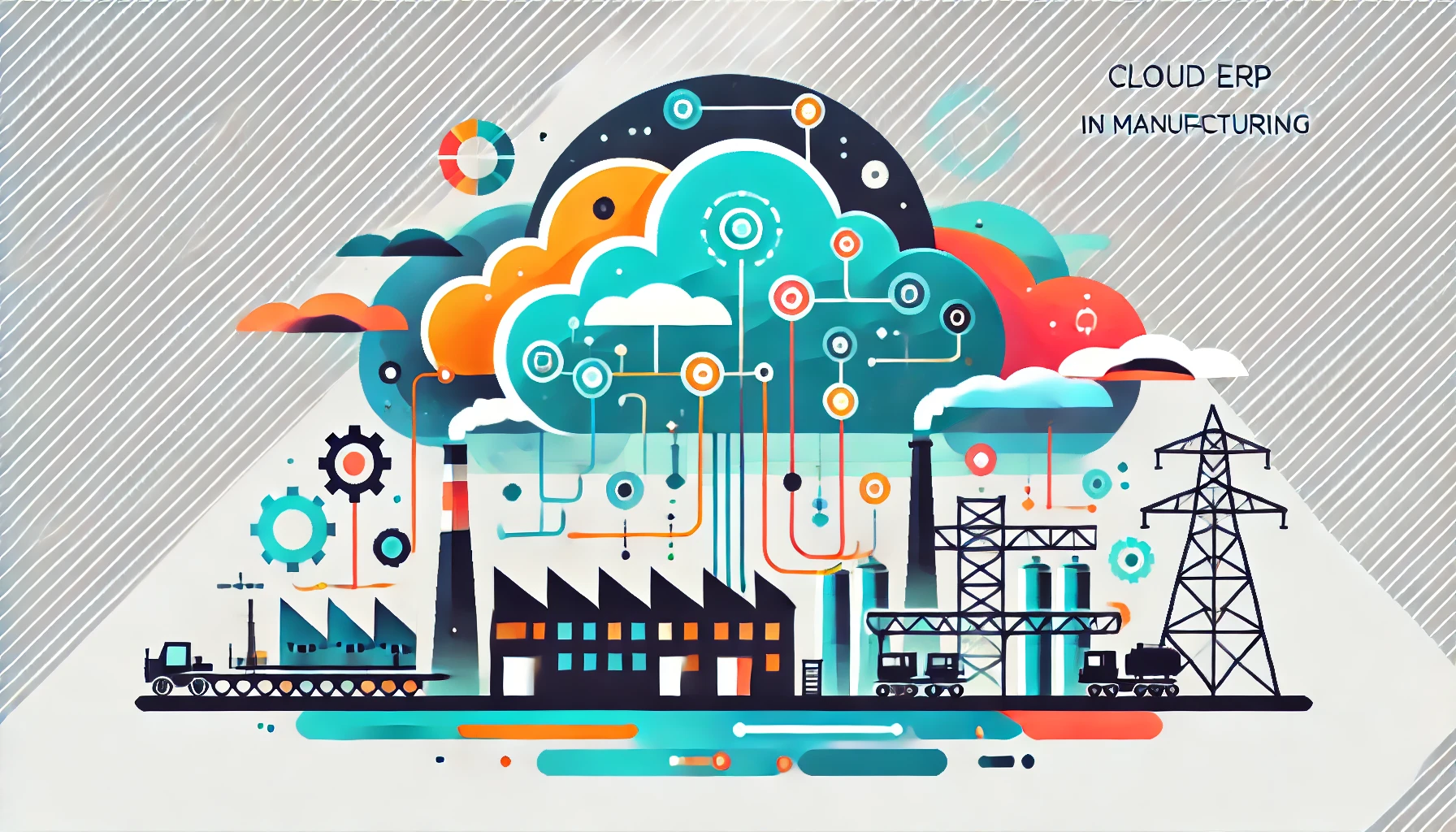
Cloud ERP adoption in manufacturing refers to the shift from traditional on-premise enterprise resource planning systems to cloud-based ERP platforms that are hosted, managed, and updated by service providers. In this first paragraph, it’s important to clarify that cloud ERP is not just a technology upgrade. For manufacturers, it represents a fundamental change in how production planning, inventory management, finance, supply chain, and operations are connected and managed in real time. As manufacturing becomes more complex and competitive, cloud ERP is increasingly seen as a strategic tool rather than just an IT decision.
What Is Cloud ERP in Manufacturing?
Cloud ERP is an enterprise resource planning system delivered over the internet instead of being installed and maintained on local servers. Manufacturers access the system through a web browser, while the ERP provider handles infrastructure, security, updates, and scalability.
In a manufacturing context, cloud ERP integrates core business functions such as production planning, materials management, procurement, finance, human resources, and sometimes manufacturing execution systems (MES). All departments work from the same real-time data, improving coordination and visibility across the factory and the supply chain.
Unlike traditional ERP systems that require heavy upfront investment and long implementation cycles, cloud ERP is typically offered on a subscription basis and can scale as the business grows.
Why Manufacturers Are Moving to Cloud ERP
Manufacturing companies are under pressure to improve efficiency, respond faster to market changes, and manage increasingly complex operations. Cloud ERP adoption is driven by several practical business needs.
Operational Visibility: Cloud ERP provides real-time insights into inventory levels, production status, and financial performance.
Scalability: Manufacturers can add users, plants, or modules without major infrastructure upgrades.
Remote Access: Managers, planners, and executives can access critical data from anywhere.
Lower IT Burden: Internal IT teams are no longer responsible for server maintenance and system updates.
Faster Innovation: Cloud ERP vendors regularly roll out new features, analytics, and integrations.
Key Benefits of Cloud ERP Adoption in Manufacturing
Improved Production Planning and Scheduling
Cloud ERP systems provide accurate, real-time data on orders, inventory, and capacity. This allows manufacturers to plan production more effectively, reduce bottlenecks, and respond quickly to changes in demand.
Better Inventory and Supply Chain Management
With cloud ERP, inventory data is always up to date. Manufacturers can reduce excess stock, avoid shortages, and improve supplier coordination. Many systems also support demand forecasting and automated replenishment.
Lower Total Cost of Ownership
Cloud ERP eliminates large upfront hardware and licensing costs. Instead, manufacturers pay predictable subscription fees, making budgeting easier and reducing long-term IT expenses.
Faster Implementation
Compared to traditional ERP, cloud ERP implementations are typically faster because infrastructure is already in place. This allows manufacturers to realize value sooner.
Enhanced Data Accuracy and Reporting
A single, centralized data source reduces manual data entry and errors. Real-time dashboards and reports support better decision-making at all levels.
Stronger Business Continuity
Cloud ERP platforms usually include built-in backup, disaster recovery, and high availability, reducing the risk of downtime caused by hardware failures.
Common Challenges in Cloud ERP Adoption
Despite its advantages, cloud ERP adoption is not without challenges.
Change Management
Employees may resist new systems and workflows. Successful adoption requires training, communication, and leadership support.
Integration with Existing Systems
Manufacturers often rely on legacy machines, MES, or custom applications. Integrating these systems with cloud ERP can require additional effort.
Data Migration
Moving historical data from legacy systems to the cloud must be carefully planned to avoid data loss or inaccuracies.
Customization Limitations
Cloud ERP systems favor standard processes. Manufacturers with highly customized workflows may need to adapt their processes or use extensions.
Connectivity Dependence
Reliable internet connectivity is essential for cloud ERP access, especially for real-time operations.
Real-World Use Cases of Cloud ERP in Manufacturing
Multi-Plant Manufacturers: Cloud ERP enables centralized control and consistent processes across multiple factories.
Make-to-Order Businesses: Real-time visibility helps manage custom orders, lead times, and material availability.
Growing Manufacturers: Companies expanding into new markets can scale ERP capabilities without rebuilding IT infrastructure.
Contract Manufacturers: Cloud ERP supports transparency, compliance, and customer reporting requirements.
Remote Management: Executives and planners can monitor operations without being physically present at the factory.
Cost Considerations for Cloud ERP Adoption
The cost of cloud ERP depends on several factors.
Subscription fees are usually based on the number of users or modules.
Implementation costs include configuration, integration, data migration, and training.
Ongoing costs include subscriptions, support, and optional enhancements.
While cloud ERP may appear expensive over time, many manufacturers find that reduced IT overhead, faster deployment, and operational efficiency deliver strong return on investment.
Pros and Cons of Cloud ERP for Manufacturing
Pros
Lower upfront investment.
Real-time data access and visibility.
Scalable and flexible.
Automatic updates and security management.
Supports digital transformation initiatives.
Cons
Ongoing subscription costs.
Limited deep customization.
Dependence on internet connectivity.
Change management effort required.
Cloud ERP vs On-Premise ERP in Manufacturing
| Aspect | Cloud ERP | On-Premise ERP |
|---|---|---|
| Upfront Cost | Low | High |
| Implementation Speed | Faster | Slower |
| Scalability | High | Limited |
| IT Maintenance | Vendor-managed | In-house |
| Customization | Moderate | High |
Best Practices for Successful Cloud ERP Adoption
Clearly define business goals and success metrics.
Involve stakeholders from operations, finance, and IT early.
Choose an ERP vendor with strong manufacturing expertise.
Plan data migration and integration carefully.
Invest in user training and change management.
Start with core modules and expand gradually.
Frequently Asked Questions
Is cloud ERP suitable for small manufacturers?
Yes. Cloud ERP is often ideal for small and mid-sized manufacturers due to lower upfront costs and scalability.
Can cloud ERP handle complex manufacturing processes?
Many modern cloud ERP platforms support advanced manufacturing features, especially when integrated with MES systems.
Is cloud ERP secure?
Reputable vendors invest heavily in security, compliance, and data protection, often exceeding in-house capabilities.
How long does cloud ERP implementation take?
Implementation can range from a few months to longer for complex operations, but it is generally faster than on-premise ERP.
Can cloud ERP integrate with shop-floor systems?
Yes. Cloud ERP can integrate with MES, IoT platforms, and automation systems.
Conclusion: Cloud ERP as a Manufacturing Enabler
Cloud ERP adoption in manufacturing is no longer just a trend—it is a strategic move toward agility, visibility, and resilience. By centralizing data, reducing IT complexity, and enabling real-time decision-making, cloud ERP helps manufacturers compete in an increasingly digital and fast-moving market.
While adoption requires planning, change management, and careful vendor selection, the long-term benefits often outweigh the challenges. For manufacturers seeking scalability, efficiency, and future-ready operations, cloud ERP has become a powerful foundation for sustainable growth.