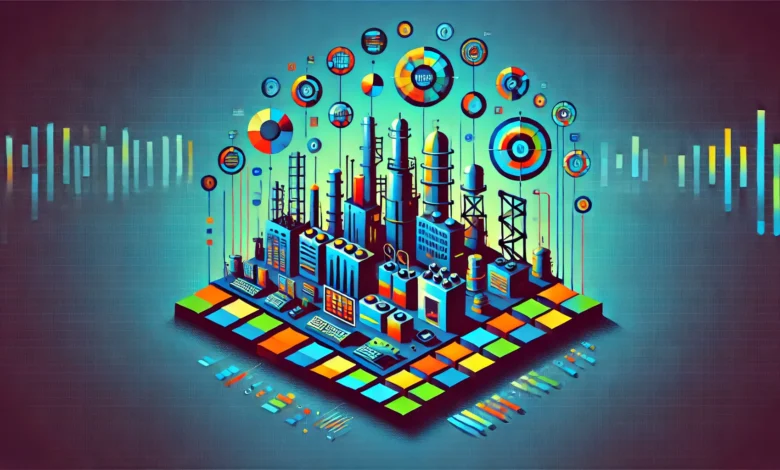
Cybersecurity threats in industrial systems refer to digital attacks that target manufacturing plants, factories, utilities, and critical infrastructure that rely on industrial control systems (ICS), operational technology (OT), and connected devices. In this first paragraph, it is essential to explain that industrial cybersecurity is no longer a niche IT concern. As factories adopt automation, IoT sensors, cloud platforms, and remote access, cyber threats can directly impact physical operations, safety, and production continuity. Unlike traditional IT breaches, cyber incidents in industrial systems can cause equipment damage, environmental harm, and even human injury.
What Are Industrial Systems?
Industrial systems are the technologies used to monitor, control, and automate physical processes. These systems include industrial control systems (ICS), supervisory control and data acquisition (SCADA), distributed control systems (DCS), programmable logic controllers (PLCs), and manufacturing execution systems (MES).
Historically, industrial systems were isolated from corporate networks and the internet. Today, digital transformation has connected these systems to enterprise IT, cloud services, and external vendors. While this connectivity improves efficiency and visibility, it also introduces new cybersecurity risks.
Why Cybersecurity Is Critical in Industrial Environments
Industrial cybersecurity threats are especially dangerous because they bridge the digital and physical worlds.
Safety Risks: Cyberattacks can manipulate machinery, leading to unsafe operating conditions.
Production Downtime: A cyber incident can halt production lines, causing major financial losses.
Equipment Damage: Malicious commands may permanently damage expensive industrial equipment.
Environmental Impact: Attacks on chemical or energy systems can cause spills or emissions.
National and Economic Security: Many industrial systems support critical infrastructure.
As a result, cybersecurity threats in industrial systems are often higher-impact than typical IT breaches.
Common Cybersecurity Threats in Industrial Systems
Ransomware Attacks
Ransomware is one of the most common threats facing industrial environments. Attackers encrypt critical systems and demand payment to restore access. In factories, ransomware can stop production entirely, affecting supply chains and customer commitments.
Unauthorized Remote Access
Remote access tools are widely used for maintenance and monitoring. If poorly secured, they allow attackers to gain direct control over industrial systems.
Malware Targeting ICS and PLCs
Specialized malware can alter control logic in PLCs or disrupt SCADA systems. These attacks may remain undetected while causing subtle process changes or long-term damage.
Phishing and Social Engineering
Employees may be tricked into revealing credentials or installing malware. Industrial staff are increasingly targeted because their access can affect both IT and OT systems.
Supply Chain Attacks
Attackers compromise software updates, vendors, or third-party service providers to gain access to industrial networks indirectly.
Insider Threats
Disgruntled or careless employees may intentionally or accidentally cause security incidents by misusing access privileges.
Legacy System Vulnerabilities
Many industrial systems run on outdated software that lacks modern security features. These systems are difficult to patch and attractive targets for attackers.
Real-World Examples of Industrial Cyber Threats
Manufacturing Shutdowns: Several global manufacturers have experienced ransomware attacks that forced plants to shut down for days or weeks.
Energy Infrastructure Attacks: Cyber incidents targeting energy and utility systems have disrupted fuel and power distribution.
Process Manipulation: Attacks that subtly change process parameters can degrade product quality without immediate detection.
Remote Access Exploits: Compromised remote maintenance tools have allowed attackers to move laterally into critical systems.
Cost and Business Impact of Industrial Cybersecurity Threats
The financial impact of industrial cyber incidents is often severe.
Lost production revenue due to downtime.
Cost of system recovery, forensic investigations, and remediation.
Equipment repair or replacement.
Regulatory fines and compliance penalties.
Reputational damage and loss of customer trust.
In many cases, the indirect costs of a cyberattack far exceed the ransom or initial damage.
Key Challenges in Securing Industrial Systems
Industrial cybersecurity presents unique challenges.
Legacy systems were not designed with security in mind.
Uptime requirements limit patching and system changes.
OT and IT teams often operate separately.
Limited visibility into industrial network traffic.
Shortage of cybersecurity skills focused on OT.
Best Practices to Mitigate Cybersecurity Threats
Network Segmentation
Separate IT and OT networks to limit attack movement.
Access Control and Authentication
Restrict access to industrial systems and use strong authentication.
Regular Risk Assessments
Identify vulnerabilities and prioritize mitigation efforts.
Monitoring and Detection
Use intrusion detection and anomaly monitoring designed for industrial protocols.
Patch and Asset Management
Maintain an inventory of assets and apply updates where possible.
Employee Training
Train staff to recognize phishing and follow cybersecurity procedures.
Incident Response Planning
Develop and test response plans specific to industrial incidents.
Pros and Cons of Increased Industrial Connectivity
Pros
Improved operational visibility.
Remote monitoring and diagnostics.
Data-driven optimization.
Integration with cloud and analytics.
Cons
Expanded attack surface.
Greater dependency on cybersecurity controls.
Higher potential impact of breaches.
Increased complexity in security management.
Traditional IT Security vs Industrial Cybersecurity
| Aspect | IT Security | Industrial Cybersecurity |
|---|---|---|
| Primary Focus | Data confidentiality | Safety and availability |
| System Lifespan | Shorter | Long-term (10–20 years) |
| Patching Frequency | Frequent | Limited |
| Failure Impact | Data loss | Physical damage and injury |
Frequently Asked Questions
Are industrial systems really targeted by hackers?
Yes. Manufacturing and critical infrastructure are increasingly targeted due to their high impact.
Is antivirus enough to protect industrial systems?
No. Industrial environments require specialized monitoring, segmentation, and controls.
Can small factories be targeted?
Yes. Attackers often target smaller plants with weaker defenses.
Does cloud integration increase risk?
It increases exposure, but risks can be managed with proper security architecture.
Who is responsible for industrial cybersecurity?
Responsibility is shared between management, IT, OT teams, and employees.
Conclusion: Securing the Digital Factory
Cybersecurity threats in industrial systems represent one of the most serious risks facing modern manufacturing and critical infrastructure. As industrial environments become more connected, the potential impact of cyber incidents grows far beyond data loss to include safety, environmental, and operational consequences.
By understanding common threats, investing in appropriate security controls, and fostering collaboration between IT and OT teams, organizations can significantly reduce their risk exposure.
In today’s digital industrial landscape, cybersecurity is no longer optional—it is a core requirement for safe, resilient, and sustainable operations.