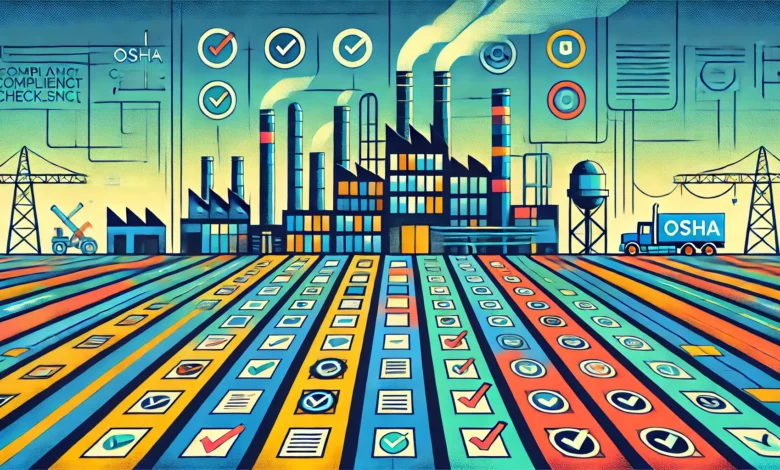
An OSHA compliance checklist for factories is a practical guide that helps manufacturing facilities meet workplace safety and health requirements set by the Occupational Safety and Health Administration (OSHA). In this first paragraph, it’s important to explain that OSHA compliance is not just about passing inspections or avoiding fines. It is about creating a safe working environment that protects employees, reduces accidents, and supports stable operations. For factories that use heavy machinery, chemicals, and complex processes, a clear compliance checklist is essential for managing risk and maintaining day-to-day safety.
What Is OSHA and Why It Matters to Factories
OSHA is a regulatory authority responsible for setting and enforcing workplace safety and health standards. These standards apply to most manufacturing and industrial workplaces and cover everything from machine guarding and electrical safety to chemical handling and employee training.
Factories are considered high-risk environments due to moving equipment, electrical systems, hazardous materials, and physically demanding tasks. As a result, OSHA compliance is especially critical in manufacturing operations.
Failure to comply with OSHA regulations can result in fines, shutdowns, legal action, increased insurance costs, and serious worker injuries. Conversely, strong compliance programs improve safety culture, productivity, and employee morale.
How to Use an OSHA Compliance Checklist
An OSHA compliance checklist is designed to be used regularly, not just before inspections.
Factories should use checklists to conduct internal audits, identify gaps, prioritize corrective actions, and document compliance efforts.
Checklists should be tailored to the specific factory, processes, and hazards involved, but most manufacturing facilities share common OSHA requirements.
General Workplace Safety Checklist
Ensure all work areas are clean, organized, and free from slip, trip, and fall hazards.
Maintain clear and unobstructed walkways, exits, and emergency routes.
Post required OSHA notices and safety signage in visible locations.
Ensure adequate lighting and ventilation throughout the facility.
Maintain floors, stairs, and platforms in safe condition.
Machine Guarding and Equipment Safety
Verify that all machines have proper guards to protect operators from moving parts.
Ensure emergency stop buttons are functional and clearly accessible.
Confirm that lockout/tagout procedures are in place for maintenance and servicing.
Train employees on safe machine operation and hazard awareness.
Inspect equipment regularly and document maintenance activities.
Electrical Safety Checklist
Ensure all electrical panels are properly labeled and accessible.
Keep electrical enclosures closed and free from obstruction.
Use grounded outlets and approved wiring methods.
Inspect cords, plugs, and tools for damage.
Allow only qualified personnel to perform electrical work.
Implement lockout/tagout procedures for electrical maintenance.
Hazard Communication and Chemical Safety
Maintain an up-to-date inventory of all hazardous chemicals.
Ensure Safety Data Sheets (SDS) are available and accessible.
Label all chemical containers clearly and correctly.
Train employees on chemical hazards, handling, and emergency response.
Provide appropriate ventilation and spill containment measures.
Store chemicals according to compatibility and regulatory requirements.
Personal Protective Equipment (PPE)
Identify tasks that require PPE such as gloves, helmets, eye protection, hearing protection, or respirators.
Provide PPE at no cost to employees where required.
Ensure PPE fits properly and is well maintained.
Train employees on proper PPE use, care, and limitations.
Enforce consistent PPE usage through supervision and policy.
Fire Safety and Emergency Preparedness
Install and maintain fire detection and alarm systems.
Ensure fire extinguishers are accessible, inspected, and appropriate for hazards present.
Clearly mark emergency exits and keep them unobstructed.
Develop and communicate emergency action and evacuation plans.
Conduct regular fire drills and emergency response training.
Workplace Ergonomics
Assess tasks for repetitive motion, heavy lifting, or awkward postures.
Provide ergonomic workstations where possible.
Train employees on proper lifting techniques.
Use mechanical aids for heavy or repetitive tasks.
Encourage reporting of discomfort or early signs of injury.
Employee Training and Documentation
Provide safety training for new hires before they begin work.
Conduct refresher training when processes, equipment, or regulations change.
Document all training sessions, attendance, and materials.
Ensure supervisors are trained to enforce safety rules.
Maintain records of incidents, near-misses, and corrective actions.
Injury and Illness Recordkeeping
Maintain required injury and illness logs accurately.
Report serious injuries, hospitalizations, or fatalities as required.
Investigate incidents to identify root causes.
Implement corrective actions to prevent recurrence.
Review incident data regularly to identify trends.
OSHA Compliance Costs for Factories
OSHA compliance involves both direct and indirect costs.
Direct costs include safety equipment, training programs, inspections, and system upgrades.
Indirect costs include time spent on audits, documentation, and process changes.
However, the cost of non-compliance—fines, injuries, downtime, legal claims, and reputational damage—is often much higher.
Most factories find that proactive compliance reduces long-term costs and improves operational stability.
Pros and Cons of Strict OSHA Compliance
Pros
Reduced workplace injuries and illnesses.
Lower legal and regulatory risk.
Improved employee morale and retention.
More stable and predictable operations.
Better standing with customers, insurers, and regulators.
Cons
Upfront investment in safety systems and training.
Ongoing administrative and documentation workload.
Possible resistance to new safety procedures.
Continuous effort required to maintain compliance.
OSHA-Compliant vs Non-Compliant Factories
| Aspect | OSHA-Compliant Factory | Non-Compliant Factory |
|---|---|---|
| Accident Risk | Low | High |
| Regulatory Exposure | Minimal | Severe |
| Employee Confidence | High | Low |
| Operational Stability | Consistent | Disrupted |
| Long-Term Costs | Controlled | Unpredictable |
Frequently Asked Questions
Is OSHA compliance mandatory for factories?
Yes. Most manufacturing facilities are legally required to comply with OSHA standards.
How often should OSHA self-audits be conducted?
Many factories conduct internal audits quarterly or annually, with additional checks after changes or incidents.
Can small factories use the same checklist?
Yes. While scale may differ, OSHA safety principles apply to factories of all sizes.
What happens if violations are found?
Violations may result in citations, fines, and required corrective actions.
Does OSHA compliance improve productivity?
Yes. Safer workplaces typically experience fewer disruptions, higher morale, and better performance.
Conclusion: Making OSHA Compliance Part of Daily Operations
An OSHA compliance checklist for factories is more than a regulatory tool—it is a practical framework for protecting workers and maintaining reliable operations. By systematically addressing machine safety, electrical hazards, chemical risks, training, and emergency preparedness, factories can significantly reduce accidents and operational disruptions.
While compliance requires ongoing effort and investment, the benefits—lower risk, stronger safety culture, and long-term business stability—far outweigh the costs. Making OSHA compliance part of everyday factory management is one of the most effective ways to ensure a safe, productive, and resilient manufacturing operation.